
How to Start a Startup in India: Step-by-Step Guide (2026)
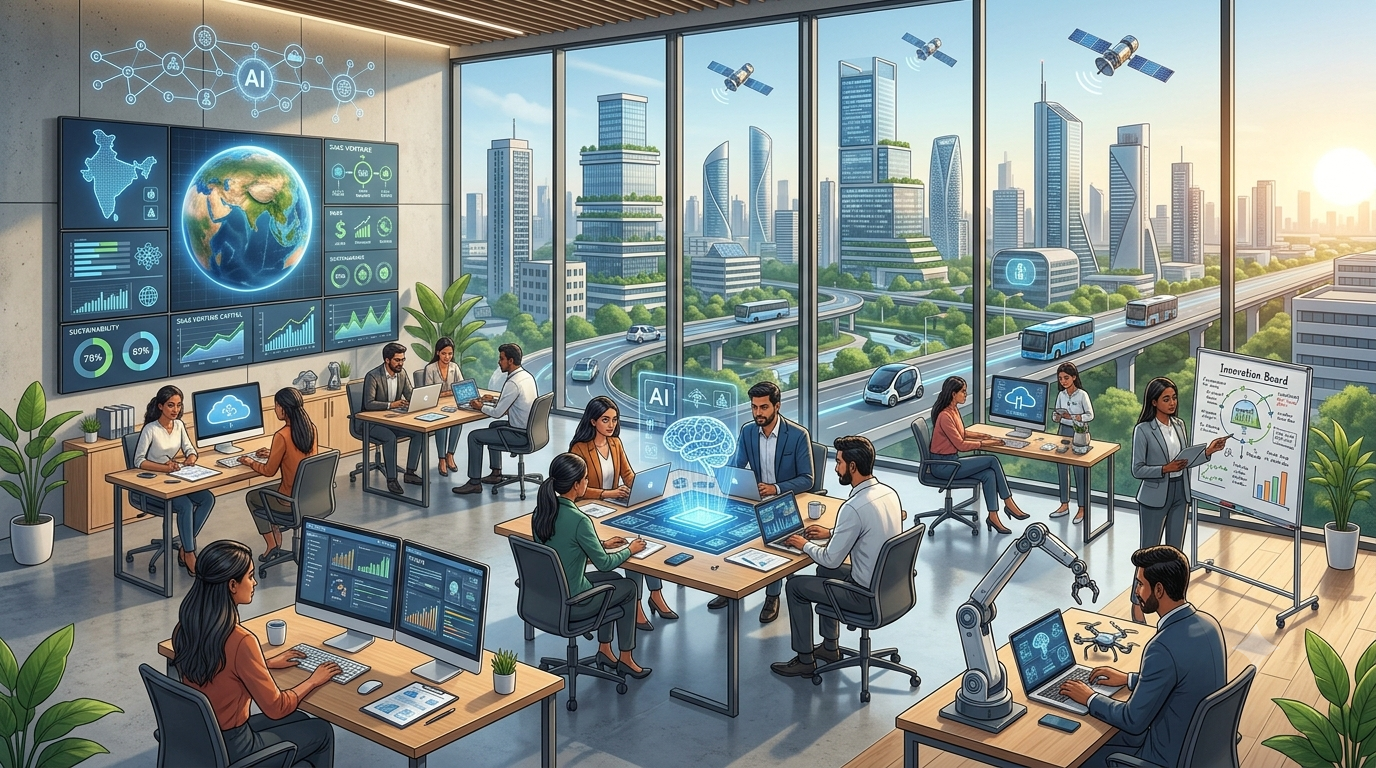
India has transformed into one of the world’s fastest-growing startup ecosystems. What was once dominated by a handful of technology companies has now expanded into thousands of innovative businesses solving real-world problems across industries such as Artificial Intelligence (AI), FinTech, HealthTech, EdTech, SaaS, ClimateTech, Agritech, Electric Vehicles (EV), DeepTech, logistics, and direct-to-consumer (D2C) brands.
According to the Department for Promotion of Industry and Internal Trade (DPIIT), India now has more than 2 lakh officially recognized startups, making it the third-largest startup ecosystem globally. Government initiatives like Startup India, increasing venture capital investments, growing digital adoption, affordable internet access, and a large pool of skilled professionals have created unprecedented opportunities for aspiring entrepreneurs.
However, building a successful startup requires much more than having a great idea. Every successful company begins by identifying a genuine problem, validating market demand, building the right product, assembling a capable team, securing funding, and continuously adapting to customer needs.
Whether you are a college student, working professional, freelancer, or experienced entrepreneur, this comprehensive guide explains how to start a startup in India in 2026 through a practical, step-by-step approach.
What Is a Startup?
A startup is a newly established business designed to solve a specific problem through innovation while having the potential to scale rapidly. Unlike traditional small businesses that primarily focus on steady local operations, startups aim to create repeatable and scalable business models capable of serving customers across cities, countries, or even globally.
Most startups leverage technology to improve efficiency, reduce costs, or deliver better customer experiences. While many startups begin with limited financial resources, their goal is to achieve sustainable growth through innovation, market demand, and operational excellence.
Today’s startups operate across numerous industries, including artificial intelligence, cybersecurity, cloud computing, financial services, healthcare, education, renewable energy, agriculture, robotics, logistics, and digital commerce.
Why India Is One of the Best Places to Launch a Startup in 2026
India offers one of the most favorable environments for entrepreneurship. A rapidly growing digital economy, government-backed initiatives, increasing investor confidence, and widespread smartphone adoption have made launching a startup more accessible than ever.
Several factors continue to fuel this growth.
First, India’s enormous consumer market allows startups to solve problems at scale. Whether targeting local communities or global customers, businesses have access to millions of potential users.
Second, the country’s technology ecosystem continues to mature. Thousands of software developers, designers, marketers, product managers, and AI specialists graduate every year, creating an extensive talent pool.
Third, startup-friendly government initiatives such as Startup India, DPIIT recognition, Startup India Seed Fund Scheme, Atal Innovation Mission, incubators, and entrepreneurship development programs help founders access mentorship, funding opportunities, and regulatory support.
Finally, artificial intelligence has lowered the barriers to entrepreneurship. Founders can now build prototypes, automate operations, analyze customer data, generate content, improve customer support, and develop software significantly faster than ever before.
Step 1: Identify a Real Problem Worth Solving
Every successful startup begins with solving a meaningful problem rather than chasing a trending idea.
Instead of asking, “What business should I start?” ask yourself, “What problem do people repeatedly experience that hasn’t been solved effectively?”
Some of the world’s largest companies began by addressing everyday frustrations. Digital payments simplified transactions. Food delivery platforms reduced waiting times. Online education improved access to learning. Ride-sharing transformed urban transportation.
Your startup idea should solve problems that people are willing to pay to eliminate.
Consider industries experiencing rapid transformation such as healthcare, AI automation, cybersecurity, fintech, agriculture, sustainability, electric mobility, education, logistics, travel, creator economy platforms, and pet care.
The stronger the problem, the greater the opportunity.
Step 2: Validate Your Startup Idea
Many startups fail because founders spend months building products without confirming whether customers actually want them.
Validation minimizes this risk.
Before investing significant time or money, speak directly with potential customers. Understand their challenges, current solutions, frustrations, and willingness to pay.
Conduct interviews, online surveys, social media discussions, and competitor analysis. Observe how customers currently solve the problem.
If people consistently express frustration and actively seek better alternatives, your idea may have genuine market demand.
Launching a simple landing page or collecting pre-orders before building the full product can provide valuable validation with minimal investment.
Step 3: Conduct Detailed Market Research
Understanding your market is essential for long-term success.
Research should answer several important questions.
Who are your target customers?
What age groups do they belong to?
What are their purchasing habits?
Which competitors already serve this market?
What pricing strategies do they use?
What complaints do customers frequently mention in reviews?
What market gaps remain unsolved?
Analyze both direct and indirect competitors. Study their products, customer experience, marketing channels, pricing models, strengths, weaknesses, and customer feedback.
Rather than copying competitors, identify opportunities where you can provide better value.
Step 4: Define Your Unique Value Proposition
Your startup must clearly communicate why customers should choose your solution instead of existing alternatives.
This is known as your Unique Value Proposition (UVP).
A strong value proposition explains:
- The problem you solve.
- Who you solve it for.
- Why your solution is different.
- What measurable benefit customers receive.
Your value proposition should be concise, memorable, and customer-focused. Instead of highlighting technical features, emphasize outcomes such as saving time, reducing costs, increasing convenience, or improving productivity.
Step 5: Choose the Right Business Model
A great product without a sustainable business model is unlikely to succeed.
Your business model determines how the company generates revenue while creating value for customers.
Common startup business models include Software-as-a-Service (SaaS) subscriptions, marketplace commissions, e-commerce sales, freemium products, advertising, licensing, consulting, direct-to-consumer (D2C) sales, enterprise software, and platform-based ecosystems.
Select a model that aligns with customer expectations, industry standards, and long-term scalability.
Before launching, estimate customer acquisition costs, operating expenses, pricing strategy, and projected profitability.
Step 6: Prepare a Practical Business Plan
A business plan serves as the roadmap for your startup.
Rather than creating an overly complex document, focus on clarity and execution.
Your plan should define your mission, target audience, market opportunity, product or service, revenue model, marketing strategy, operational requirements, financial projections, funding requirements, and long-term growth objectives.
Investors often evaluate founders based not only on the quality of their ideas but also on how realistically they have planned execution.
Step 7: Register Your Startup Legally
Choosing the appropriate legal structure protects your business while improving credibility among customers and investors.
Many startups in India register as Private Limited Companies because they offer greater fundraising flexibility and limited liability.
Other options include Limited Liability Partnerships (LLPs), Partnership Firms, Sole Proprietorships, and One Person Companies (OPCs), depending on business goals.
After incorporation, startups should obtain necessary registrations such as PAN, TAN, GST (if applicable), and open a dedicated business bank account.
For eligible businesses, obtaining DPIIT Startup Recognition provides access to various government benefits, tax exemptions, funding opportunities, mentorship programs, and easier participation in innovation initiatives.
Step 8: Build a Minimum Viable Product (MVP)
One of the biggest mistakes first-time founders make is trying to build a perfect product before launching. In reality, successful startups release an MVP—a Minimum Viable Product—with only the essential features required to solve the customer’s primary problem.
An MVP allows you to enter the market quickly, gather real customer feedback, identify bugs, and improve the product based on actual usage instead of assumptions.
For example, if you’re building a food delivery platform, your first version doesn’t need AI-powered recommendations, loyalty programs, or advanced analytics. It only needs a simple interface that allows customers to order food successfully.
Launching early helps reduce development costs while increasing learning speed. Many globally successful startups started with simple products before evolving into sophisticated platforms.
Step 9: Build the Right Founding Team
Investors often say they invest in people before they invest in products.
A strong founding team combines complementary skills instead of similar expertise. One founder may focus on product development, another on technology, while another manages operations, finance, or sales.
Choose co-founders carefully. Shared values, trust, transparency, and long-term commitment matter more than impressive resumes.
As your startup grows, hire people who believe in your vision. Early employees shape company culture, customer experience, and execution quality.
Instead of recruiting a large team immediately, focus on hiring versatile professionals who can adapt to multiple responsibilities during the early stages.
Step 10: Arrange Funding for Your Startup
Funding is important, but it should never be the first goal. A startup with paying customers often attracts investors more easily than one with only an idea.
In India, founders have multiple funding options depending on the stage of their business.
The first option is bootstrapping, where founders use their own savings or revenue to grow the business. Bootstrapped startups usually maintain greater control and develop disciplined financial habits.
Friends and family may provide initial capital during the idea stage, though such arrangements should always be documented professionally.
Angel investors support promising startups with early-stage funding in exchange for equity. Besides capital, they often provide valuable mentorship and industry connections.
As startups demonstrate traction, venture capital firms become potential funding partners. Venture capital investors typically look for scalable businesses with significant market potential, recurring revenue, and strong leadership teams.
Crowdfunding has also become increasingly popular for product-based businesses seeking market validation while raising capital from early supporters.
Government initiatives have created additional opportunities for founders. DPIIT-recognized startups can explore the Startup India Seed Fund Scheme, incubator-led grants, innovation challenges, state startup missions, and sector-specific entrepreneurship programs designed to help companies develop prototypes, validate products, and commercialize innovations.
Step 11: Take Advantage of Startup Incubators and Accelerators
Many first-time entrepreneurs underestimate the value of mentorship.
Startup incubators and accelerators provide structured support that extends beyond funding. They offer office infrastructure, networking opportunities, technical guidance, investor introductions, legal assistance, business mentoring, and access to experienced founders.
India now has hundreds of incubators operating through universities, research institutions, private organizations, government agencies, and corporate innovation programs.
Accelerators generally work with startups that already have an MVP and some market traction, helping them refine business models, prepare for fundraising, and scale operations faster.
Participating in the right startup program can significantly reduce common mistakes while expanding your professional network.
Step 12: Use AI to Build Faster and Smarter
Artificial Intelligence has fundamentally changed how startups operate.
Tasks that previously required large teams can now be completed by small, highly productive organizations using AI-powered tools.
AI can help founders conduct market research, analyze customer behavior, automate customer support, generate marketing content, improve software development, predict demand, optimize inventory, personalize user experiences, detect fraud, and improve decision-making.
Startups building AI-native products are also attracting significant investor attention across industries such as healthcare, finance, education, logistics, cybersecurity, manufacturing, agriculture, and customer service.
Rather than viewing AI as a replacement for people, successful founders use it to improve productivity while allowing employees to focus on creativity, innovation, and strategic thinking.
Step 13: Develop an Effective Go-to-Market Strategy
Even an excellent product can fail if customers never discover it.
A go-to-market strategy defines how your startup acquires its first customers and builds sustainable growth.
Start by identifying your ideal customer profile. Understand where your audience spends time online, what influences purchasing decisions, and which communication channels they trust.
Digital marketing plays an essential role in customer acquisition. Search engine optimization (SEO), content marketing, social media, email campaigns, influencer collaborations, paid advertising, webinars, and referral programs all contribute to building visibility.
Founders should avoid relying on a single marketing channel. A diversified customer acquisition strategy reduces dependence on algorithm changes or advertising costs.
Equally important is measuring performance. Track website traffic, conversion rates, customer acquisition costs, retention rates, customer lifetime value, and revenue growth to understand which marketing efforts generate the best results.
Step 14: Focus on Customer Feedback
Customers shape successful startups.
Instead of assuming what users want, continuously collect feedback through surveys, interviews, support conversations, product analytics, online reviews, and social media interactions.
Every complaint represents an opportunity to improve your product.
Founders who actively listen to customers build stronger products, higher retention rates, and better brand loyalty.
Many of today’s leading startups have significantly changed their original products based on customer insights rather than sticking rigidly to their initial vision.
Product development should always be viewed as an ongoing process rather than a one-time project.
Step 15: Build a Strong Brand from Day One
Branding is far more than designing a logo.
Your brand represents the experience customers associate with your company.
Everything contributes to brand perception, including your website, messaging, customer support, product quality, pricing, communication style, and company values.
Develop a memorable business name, maintain consistent visual identity, and communicate clearly across every customer interaction.
Modern consumers increasingly support companies that demonstrate transparency, authenticity, sustainability, and social responsibility.
A trusted brand not only attracts customers but also makes hiring talent, securing partnerships, and raising investment significantly easier.
Step 16: Scale Your Startup Strategically
Growth should never come at the expense of sustainability.
Many startups fail because they expand into multiple markets before perfecting operations in one.
Before scaling, ensure your business has repeatable processes, healthy unit economics, reliable customer acquisition, stable technology infrastructure, and sufficient financial reserves.
Automation becomes increasingly important during growth. Implement systems for accounting, customer relationship management (CRM), inventory management, HR, analytics, and customer support to improve efficiency.
International expansion may become an opportunity for startups offering digital products, SaaS platforms, AI solutions, and online services.
However, every expansion decision should be supported by customer demand and operational readiness rather than ambition alone.
Common Mistakes That Cause Startups to Fail
While India’s startup ecosystem continues to grow rapidly, many startups still struggle because they repeat avoidable mistakes.
The most common reason is building products that solve problems customers do not actually have. Without genuine market demand, even well-funded startups face significant challenges.
Another frequent mistake is running out of cash due to excessive spending before establishing sustainable revenue. Expanding too quickly, hiring large teams prematurely, investing heavily in branding before validating the product, and relying entirely on external funding can create serious financial pressure.
Some founders ignore customer feedback, assuming they already know what the market wants. Others fail to differentiate themselves from competitors, making it difficult to attract loyal customers.
Weak leadership, founder disagreements, poor execution, regulatory non-compliance, unrealistic financial planning, and inconsistent marketing strategies have also contributed to the downfall of numerous startups.
The most successful entrepreneurs view failure not as the end of the journey but as an opportunity to learn, adapt, and build stronger businesses
Startup Trends That Will Shape India in 2026 and Beyond
India’s startup ecosystem is evolving faster than ever before. While traditional sectors such as e-commerce and food delivery continue to grow, the next wave of startups is being driven by advanced technologies, sustainability, and digital transformation. Entrepreneurs who align their businesses with these emerging trends are more likely to build scalable and future-ready companies.
Artificial Intelligence is expected to remain the biggest growth driver. Startups are using generative AI, machine learning, computer vision, and natural language processing to automate workflows, improve customer experiences, accelerate software development, and reduce operational costs. AI-powered solutions are finding applications in healthcare diagnostics, legal services, finance, education, retail, manufacturing, agriculture, and customer support.
Software-as-a-Service (SaaS) continues to be one of India’s strongest startup sectors. Indian SaaS companies are increasingly serving global customers by offering subscription-based software for businesses of all sizes. With relatively low infrastructure costs and high scalability, SaaS remains an attractive opportunity for entrepreneurs.
ClimateTech is another rapidly growing sector. Startups focusing on renewable energy, carbon management, sustainable packaging, electric mobility, clean manufacturing, water conservation, and waste management are attracting increased investment from both private and public institutions as sustainability becomes a global priority.
The FinTech industry continues to expand beyond digital payments into embedded finance, digital lending, wealth management, insurance technology, cross-border payments, and financial inclusion. India’s digital public infrastructure has created opportunities for startups to build innovative financial products for consumers and businesses.
HealthTech is transforming healthcare delivery through telemedicine, remote patient monitoring, AI-assisted diagnostics, wearable technology, electronic health records, and preventive healthcare platforms. As healthcare demand increases, technology-driven solutions are expected to play a much larger role.
EdTech is evolving beyond online classes to include personalized learning powered by AI, skill-based education, corporate training, language learning, and professional certification platforms. Lifelong learning has become an essential requirement in today’s rapidly changing job market.
Agritech startups are helping farmers improve productivity through precision farming, IoT devices, satellite imaging, weather forecasting, digital marketplaces, and supply chain optimization. Technology is making agriculture more efficient while improving market access for producers.
The creator economy is also generating new entrepreneurial opportunities. Startups supporting content creators with monetization tools, analytics, AI-assisted content creation, digital marketing solutions, community platforms, and online commerce continue to attract strong investor interest.
Government Support for Startups in India
The Indian government has introduced several initiatives that make it easier for entrepreneurs to launch and grow innovative businesses.
Startup India remains one of the country’s flagship initiatives for entrepreneurship. Eligible startups can benefit from easier compliance procedures, intellectual property support, networking opportunities, self-certification for certain labour and environmental laws, and access to government-backed programs.
DPIIT recognition provides startups with credibility while opening doors to various incentives, incubators, funding opportunities, and startup-focused initiatives. Many investors and accelerator programs also consider DPIIT recognition an advantage during the evaluation process.
The Startup India Seed Fund Scheme helps eligible startups develop proof of concept, build prototypes, conduct product trials, and commercialize innovative ideas through approved incubators. For many early-stage companies, this support bridges the critical gap between ideation and market entry.
State governments have also established startup policies, innovation missions, and incubation centres to encourage entrepreneurship across different regions. Universities, research institutions, and corporate innovation hubs further strengthen the ecosystem by providing mentorship, networking, and technical assistance.
Building a Startup That Investors Want to Fund
Raising investment is not simply about having an exciting idea. Investors look for evidence that a startup has the potential to become a sustainable and scalable business.
A strong founding team is often the first factor investors evaluate. They want founders who understand the problem deeply, possess complementary skills, and demonstrate resilience during challenges.
Market opportunity is equally important. Investors prefer businesses operating in large or rapidly growing markets where significant long-term demand exists.
Traction plays a crucial role. Customer growth, recurring revenue, product adoption, retention rates, partnerships, and positive user feedback provide confidence that the business is solving a real problem.
Clear financial planning also matters. Investors expect founders to understand their customer acquisition costs, revenue model, profit margins, operational expenses, and future capital requirements.
Finally, startups that demonstrate innovation, scalability, and a competitive advantage are more likely to attract funding than businesses competing solely on price.
Final Checklist Before Launching Your Startup
Before officially launching your startup, ensure you have completed the essentials.
- Identified a genuine market problem.
- Validated your idea with potential customers.
- Researched competitors thoroughly.
- Defined a clear value proposition.
- Selected an appropriate business model.
- Prepared a practical business plan.
- Registered your business legally.
- Built a Minimum Viable Product (MVP).
- Established an online presence through a professional website.
- Developed a customer acquisition strategy.
- Planned your finances and cash flow.
- Built systems for continuous customer feedback and product improvement.
Completing these steps significantly increases your chances of building a sustainable business.
Conclusion
Starting a startup in India in 2026 presents an exciting opportunity, but success requires much more than a brilliant idea. It demands careful planning, market validation, disciplined execution, financial responsibility, and a relentless focus on solving customer problems.
India’s thriving startup ecosystem, supportive government policies, expanding digital economy, and growing access to funding have created one of the most favorable environments for entrepreneurs. At the same time, increasing competition means founders must build products that genuinely stand out through innovation, customer experience, and long-term value creation.
Remember that every successful startup—from global technology giants to emerging Indian unicorns—started with a simple idea backed by consistent execution. Many companies refined their products multiple times before achieving product-market fit. The founders who succeed are rarely those with perfect ideas; they are the ones who continuously learn, adapt, and improve.
If you are planning to launch your own venture, start by solving a real problem, validate your assumptions early, build an MVP, leverage government initiatives and startup support programs, embrace AI and digital technologies where appropriate, and remain focused on delivering exceptional value to your customers.
The Indian startup ecosystem is entering a new era of innovation driven by artificial intelligence, sustainability, digital transformation, and global ambition. With the right strategy, persistence, and execution, your startup could become part of the next generation of businesses shaping India’s economy and making an impact around the world.

NCR DELHI TEAM