
Top 20 Indian Startups to Watch in 2026
By NCR DELHI TEAM July 15, 2026

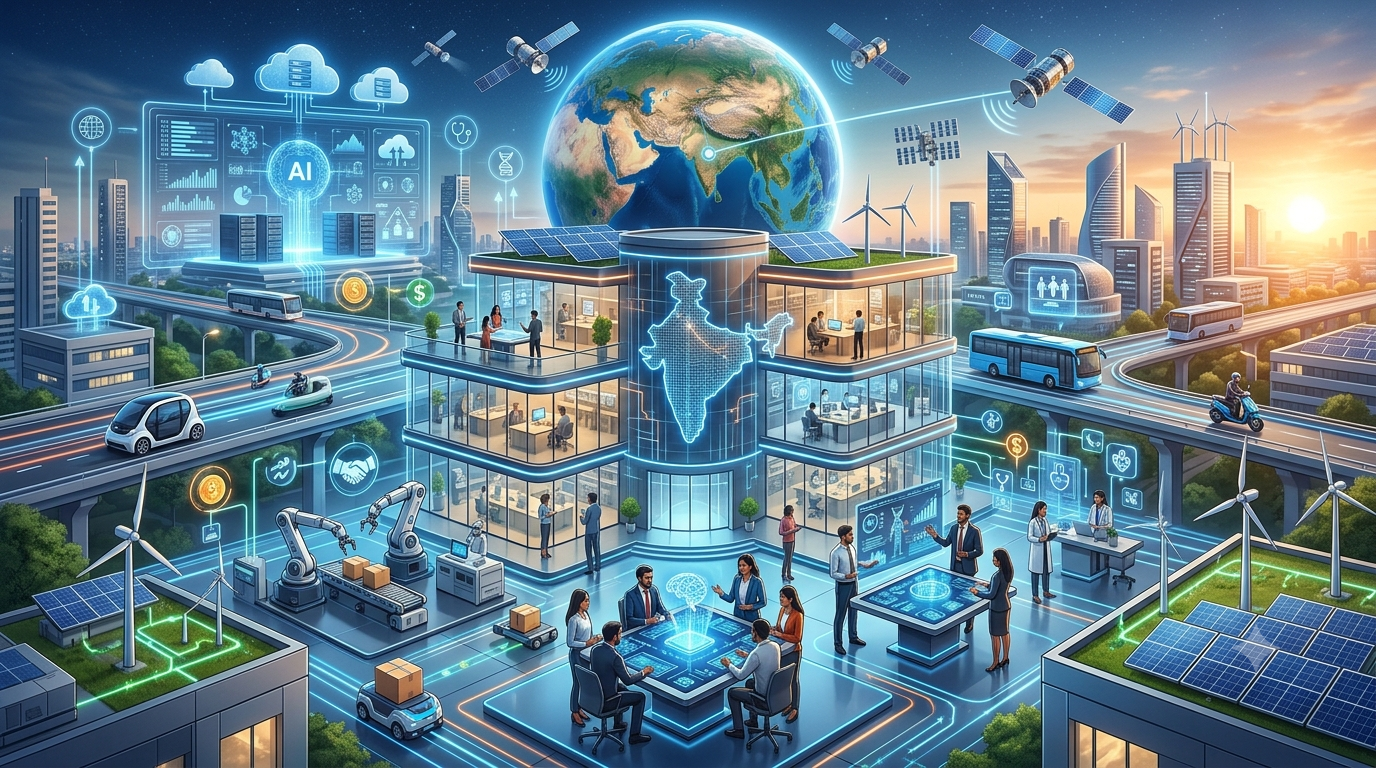
India’s startup ecosystem has entered a new era of innovation. Once dominated by e-commerce and digital payments, the country’s entrepreneurial landscape is now being transformed by artificial intelligence, deep technology, climate innovation, healthcare, robotics, space technology, fintech, and enterprise software. With government-backed initiatives, increased venture capital investments, global accelerators, and a growing talent pool, India has become one of the world’s leading startup hubs.

In 2026, the focus is no longer just on creating another unicorn. Investors and customers are looking for startups that solve real-world problems, leverage cutting-edge technology, and build sustainable business models. From AI-powered automation platforms to electric mobility solutions and biotech innovations, Indian startups are redefining industries while competing on a global stage.

Government initiatives such as Startup India, DPIIT recognition, startup incubators, seed funding programs, and innovation grants have also made it easier for entrepreneurs to turn ideas into scalable businesses. At the same time, cloud computing, generative AI, no-code platforms, and digital infrastructure have significantly lowered the barriers to launching technology-driven companies.

This article highlights the top 20 Indian startups to watch in 2026 based on innovation, market potential, funding momentum, technology adoption, and industry impact. Whether you are an investor, entrepreneur, student, or technology enthusiast, these startups represent the future of India’s innovation economy.

Why Indian Startups Are Thriving in 2026

India continues to be one of the fastest-growing startup ecosystems globally. The country has witnessed rapid growth in AI adoption, digital payments, SaaS exports, EV manufacturing, health technology, agritech, and climate-focused businesses. The combination of a large domestic market, skilled engineering talent, improved internet connectivity, and increasing global investment has created ideal conditions for startup growth.

Today’s founders are solving complex challenges in healthcare accessibility, financial inclusion, cybersecurity, logistics, education, sustainability, and manufacturing. Rather than copying existing business models, many startups are building original technologies designed for both Indian and international markets.

Artificial intelligence has emerged as the biggest growth driver. Businesses across industries are integrating AI into customer support, software development, medical diagnostics, legal research, content creation, supply chain management, and enterprise automation. As a result, AI startups are attracting significant investor attention in 2026.

What Makes a Startup Worth Watching?

A promising startup is more than a company with impressive funding. The most successful startups solve meaningful problems, have a scalable business model, demonstrate consistent customer growth, and continue innovating even in competitive markets.

Several factors separate high-potential startups from the rest. These include a strong founding team, proprietary technology, sustainable revenue growth, expanding market opportunities, efficient operations, customer satisfaction, and the ability to adapt to changing market conditions. Startups that embrace artificial intelligence, automation, cloud computing, and data-driven decision-making are particularly well positioned for long-term success.

1. Sarvam AI

Sarvam AI has emerged as one of India’s most exciting artificial intelligence startups by building large language models and AI solutions specifically designed for Indian languages. As enterprises increasingly adopt generative AI, Sarvam AI is helping businesses create multilingual AI applications that better serve India’s diverse population.

Its focus on natural language processing, enterprise AI, and regional language support makes it one of the most influential AI startups to watch in 2026. With growing demand from government organizations and private enterprises, the company is expected to play a major role in India’s AI ecosystem.

2. Netrasemi

Netrasemi is gaining recognition for designing semiconductor chips optimized for artificial intelligence and edge computing applications. As India strengthens its semiconductor manufacturing capabilities, startups like Netrasemi are contributing to reducing dependence on imported technologies.

Its innovations support industries such as automotive, industrial automation, smart devices, and IoT, making it a significant player in India’s growing deep-tech landscape.

3. Agnikul Cosmos

India’s space technology sector is expanding rapidly, and Agnikul Cosmos is among the leading private space startups driving this transformation. The company develops customizable launch vehicles capable of deploying small satellites into orbit efficiently and cost-effectively.

With increasing demand for satellite launches worldwide, Agnikul represents India’s growing ambitions in commercial space technology and aerospace innovation.

4. The ePlane Company

Urban mobility is changing quickly, and The ePlane Company is developing electric flying vehicles designed to transform short-distance transportation. The startup combines electric propulsion, autonomous systems, and sustainable aviation technology to address congestion in metropolitan cities.

As advanced air mobility gains momentum globally, this startup has significant long-term growth potential.

5. Ultraviolette Automotive

Electric mobility continues to reshape India’s automobile industry. Ultraviolette Automotive has established itself as one of the country’s leading electric motorcycle manufacturers by combining high-performance engineering with advanced battery technology.

Its focus on premium electric vehicles, connected technology, and continuous innovation positions it among India’s most promising mobility startups.

6. GreenGrahi

GreenGrahi is tackling one of the world’s biggest environmental challenges by converting agricultural waste into sustainable materials and alternative protein products using insect biotechnology.

By promoting circular economy principles and reducing waste, the company demonstrates how climate technology startups can generate both environmental and commercial value.

7. GalaxEye Space

GalaxEye Space develops advanced earth observation satellites capable of providing high-resolution imaging regardless of weather conditions or time of day.

Its technology supports agriculture, disaster management, defence, infrastructure planning, and environmental monitoring, making it an important contributor to India’s expanding space ecosystem.

8. Qure.ai

Healthcare continues to benefit from artificial intelligence, and Qure.ai remains one of India’s leading medical AI companies. Its solutions assist healthcare professionals in detecting diseases through medical imaging, improving diagnosis speed and accuracy.

Hospitals worldwide are adopting AI-assisted diagnostics, positioning Qure.ai as a global leader in healthcare innovation.

9. Niramai

Niramai is revolutionizing breast cancer screening through AI-powered thermal imaging technology. Unlike conventional screening methods, its solution is non-invasive, radiation-free, and suitable for early detection.

The startup addresses one of India’s major healthcare challenges while making advanced diagnostics more accessible and affordable.

10. Skyroot Aerospace

Skyroot Aerospace continues to strengthen India’s private space industry by developing affordable satellite launch vehicles. The startup aims to make space more accessible for commercial organizations, research institutions, and international customers.

With successful technological milestones and increasing interest in satellite-based services, Skyroot remains one of India’s most closely watched space startups in 2026.

11. Scimplify

Scimplify is transforming the specialty chemicals and pharmaceutical manufacturing industry by creating a technology-driven sourcing and manufacturing platform. The startup helps businesses streamline procurement, improve supply chain efficiency, and reduce production complexities through digital solutions.

As India strengthens its position as a global manufacturing hub, startups like Scimplify are becoming increasingly important for pharmaceutical companies, research organizations, and industrial manufacturers. Its technology-first approach makes it one of the fastest-growing B2B startups to watch in 2026.

12. Vecmocon Technologies

India’s electric vehicle revolution depends on smarter battery management and connected mobility systems. Vecmocon Technologies develops intelligent electronic systems for electric vehicles, enabling manufacturers to improve battery performance, vehicle safety, and energy efficiency.

With EV adoption accelerating across passenger vehicles, commercial fleets, and two-wheelers, Vecmocon is well positioned to become a key technology provider in India’s clean mobility ecosystem.

13. NewMe

NewMe has quickly established itself as a digital-first fashion startup catering to Gen Z consumers. The company leverages data analytics, social commerce, influencer marketing, and AI-driven demand forecasting to launch trend-focused collections at remarkable speed.

Unlike traditional fashion retailers, NewMe uses customer insights and digital engagement to shorten product development cycles, making it one of India’s most exciting direct-to-consumer (D2C) fashion startups.

14. Blitz

Blitz is addressing the growing demand for ultra-fast commerce and logistics by building technology that enables rapid order fulfillment. As consumers increasingly expect same-day or even hourly deliveries, logistics innovation has become essential for retailers and e-commerce platforms.

Through route optimization, intelligent warehouse management, and operational automation, Blitz is helping businesses deliver products more efficiently while improving customer experience.

15. Neysa

Artificial intelligence requires powerful cloud infrastructure, and Neysa is emerging as an important player by providing AI-focused cloud computing solutions. The startup enables businesses to build, train, and deploy AI applications without investing heavily in their own computing infrastructure.

With enterprises rapidly adopting generative AI, machine learning, and large language models, demand for scalable AI cloud platforms is expected to grow significantly over the coming years.

16. Krutrim

Krutrim is one of India’s most talked-about AI startups, focusing on developing large language models and AI products tailored to Indian users. Its vision extends beyond conversational AI to creating a complete ecosystem for developers, enterprises, and consumers.

As businesses seek AI solutions that understand India’s languages, culture, and business environment, Krutrim has the potential to become a major force in the country’s artificial intelligence landscape.

17. Pixxel

Pixxel is redefining satellite imaging through hyperspectral earth observation technology. Unlike conventional satellites, hyperspectral imaging captures far more detailed environmental information, enabling better monitoring of agriculture, mining, forests, water resources, and climate change.

Governments, researchers, and enterprises increasingly rely on such advanced geospatial intelligence, making Pixxel one of India’s most innovative space technology startups.

18. CynLr

Industrial robotics continues to evolve, and CynLr is developing visual object intelligence systems that allow robots to identify, understand, and manipulate objects more effectively. This technology has applications across manufacturing, warehousing, logistics, and industrial automation.

As Industry 4.0 adoption increases, startups like CynLr are helping businesses automate complex processes while improving productivity and reducing operational costs.

19. HealthPlix

HealthPlix is transforming healthcare through digital medical records and AI-powered clinical decision support. Doctors can manage patient information, generate prescriptions, access medical insights, and improve treatment outcomes using a unified digital platform.

The increasing digitization of healthcare, combined with government initiatives promoting digital health infrastructure, positions HealthPlix as an important player in India’s HealthTech sector.

20. Euler Motors

Commercial electric vehicles represent one of India’s fastest-growing transportation segments. Euler Motors focuses on manufacturing electric commercial vehicles designed for last-mile logistics, urban transportation, and fleet operations.

With e-commerce companies expanding their delivery networks and businesses seeking sustainable transportation solutions, Euler Motors is expected to play a significant role in India’s electric mobility future.

Startup Trends Defining India’s Innovation Landscape in 2026

The Indian startup ecosystem is evolving faster than ever, driven by technological innovation and changing consumer expectations. Artificial intelligence is no longer limited to technology companies; it is being integrated into healthcare, finance, education, manufacturing, retail, agriculture, and customer service. Startups developing AI-powered automation, predictive analytics, intelligent software, and multilingual language models are attracting significant investment from both domestic and international investors.

Climate technology has also become a major area of focus. Startups working on renewable energy, carbon reduction, sustainable manufacturing, waste management, and circular economy solutions are gaining momentum as businesses and governments prioritize environmental sustainability.

The SaaS sector continues to strengthen India’s position as a global software powerhouse. Indian startups are building enterprise software solutions that serve customers worldwide, generating recurring revenue while demonstrating strong scalability.

Space technology is another emerging frontier. Private companies are developing launch vehicles, satellite imaging platforms, and space-based data services that support industries ranging from agriculture and disaster management to telecommunications and defence.

Healthcare innovation remains equally important. AI-powered diagnostics, digital health platforms, remote patient monitoring, and preventive healthcare technologies are helping improve access to quality medical services across urban and rural India.

Why Investors Are Paying Attention

Venture capital firms, angel investors, and institutional funds are increasingly looking beyond traditional internet businesses. Today’s investors prefer startups with strong technology, sustainable business models, measurable revenue growth, and experienced founding teams.

Startups operating in artificial intelligence, semiconductor technology, electric vehicles, defence technology, enterprise software, biotechnology, robotics, cybersecurity, fintech, and climate innovation continue to attract substantial funding because these sectors address long-term global opportunities rather than short-term market trends.

Government initiatives such as Startup India, DPIIT recognition, the Startup India Seed Fund Scheme, incubators, accelerators, and innovation grants further strengthen investor confidence by providing startups with funding support, mentorship, and business development opportunities.

Lessons for Aspiring Entrepreneurs

The success stories of India’s leading startups demonstrate that innovation alone is not enough. Founders must solve genuine customer problems, validate their ideas before scaling, build sustainable revenue models, and remain adaptable in rapidly changing markets.

Many startups fail because they expand too quickly, ignore customer feedback, spend excessively before achieving product-market fit, or struggle with cash flow management. Successful entrepreneurs prioritize customer needs, continuously improve their products, embrace technology, and make data-driven decisions.

Artificial intelligence, cloud computing, automation, and digital infrastructure have made it easier than ever to launch technology-driven businesses. However, long-term success still depends on disciplined execution, financial planning, operational efficiency, and the ability to innovate consistently.

The Future of Indian Startups

The next decade promises unprecedented opportunities for Indian entrepreneurs. As AI becomes mainstream, semiconductor manufacturing expands, digital public infrastructure matures, and sectors such as robotics, biotechnology, defence, quantum computing, climate technology, and space exploration gain momentum, India is poised to become one of the world’s leading innovation economies.

The startups featured in this list represent more than high-growth businesses—they showcase the country’s ability to solve complex challenges through technology, research, and entrepreneurship. While some will become global market leaders, others will inspire the next generation of founders to build solutions with worldwide impact.

For investors, professionals, and aspiring entrepreneurs, keeping a close eye on these emerging companies offers valuable insight into where India’s startup ecosystem is headed. From AI-powered software and advanced manufacturing to sustainable mobility and healthcare innovation, these startups are shaping industries that will define the future of business in India and beyond.

As the ecosystem continues to mature, supported by government initiatives, global investors, world-class talent, and cutting-edge technology, 2026 is set to be another milestone year for Indian startups. The companies that combine innovation, scalability, customer focus, and sustainable growth will not only lead the domestic market but also establish India as a global hub for entrepreneurship and technological excellence.

NCR DELHI TEAM