
AI in Fashion: How Artificial Intelligence is Changing the Fashion Industry (2026 Complete Guide)
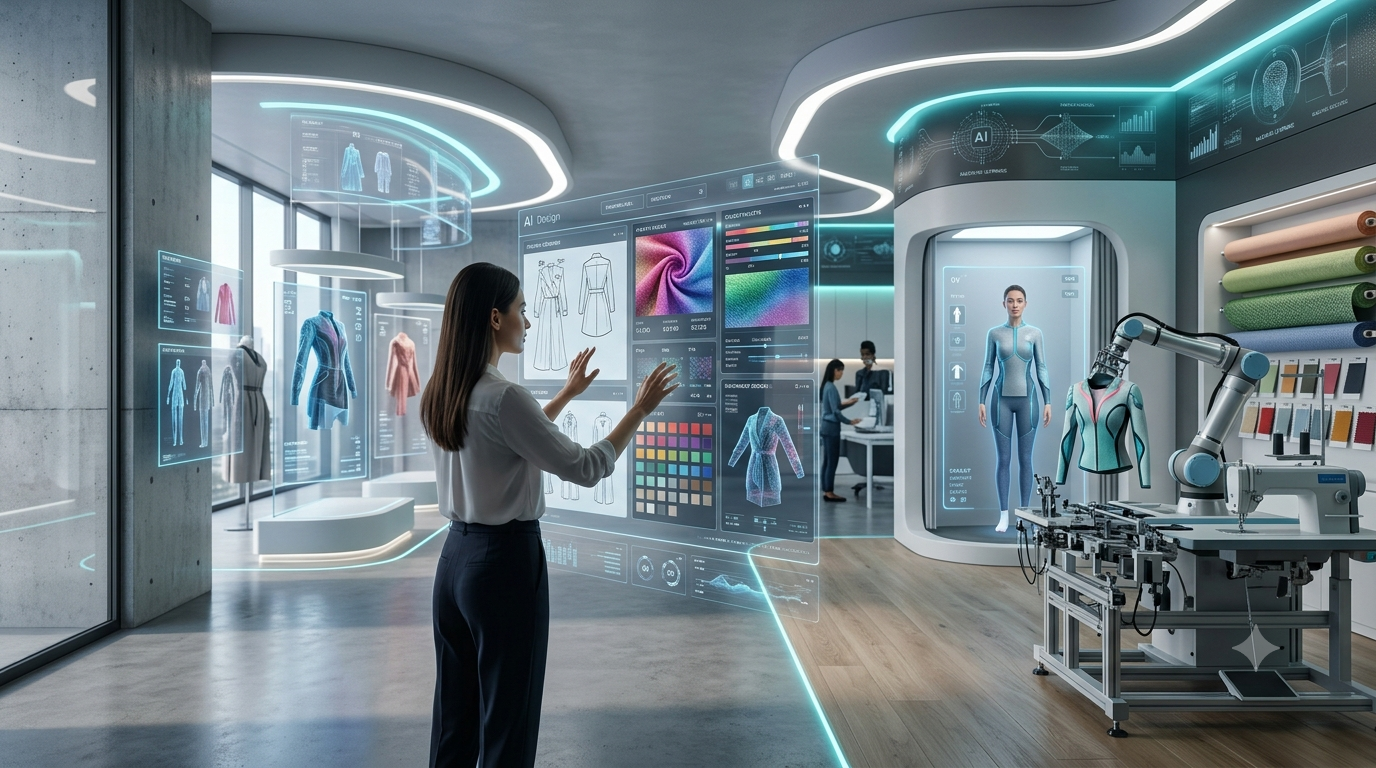
Artificial intelligence is no longer a futuristic concept in the fashion industry. It has become one of the biggest forces transforming how clothes are designed, manufactured, marketed, sold, and even worn. From predicting the next viral fashion trend to helping shoppers find the perfect outfit in seconds, AI is reshaping every stage of the fashion journey.
Just a few years ago, fashion brands relied heavily on intuition, historical sales data, and seasonal runway shows to make decisions. Today, machine learning algorithms analyze millions of customer interactions, social media posts, online searches, weather patterns, and purchasing behaviors to forecast trends with remarkable accuracy. This shift allows brands to create products that consumers actually want while reducing waste and improving profitability.
For consumers, artificial intelligence has created a more personalized shopping experience. Virtual stylists, AI-powered recommendations, digital fitting rooms, and visual search tools make shopping faster, easier, and more enjoyable. Meanwhile, fashion designers are embracing generative AI to explore new ideas, experiment with colors and fabrics, and accelerate the creative process without replacing human creativity.
As the fashion industry moves into 2026, AI is influencing everything from sustainable production and inventory management to luxury retail and affordable fast fashion. Understanding these changes is essential for brands, designers, retailers, and consumers alike.
What Is AI in Fashion?
Artificial intelligence in fashion refers to the use of advanced technologies such as machine learning, computer vision, predictive analytics, natural language processing, and generative AI to automate tasks, improve decision-making, and enhance customer experiences across the fashion ecosystem.
Unlike traditional software that follows predefined rules, AI continuously learns from new data. This enables fashion businesses to identify emerging trends, understand customer preferences, recommend personalized products, optimize inventory, predict demand, and streamline operations with increasing accuracy.
The modern fashion industry generates enormous amounts of data every day. AI transforms this data into valuable insights, helping brands make smarter decisions while delivering products that better align with consumer expectations.
Why Artificial Intelligence Is Becoming Essential in Fashion
Fashion has always been driven by trends, creativity, and consumer preferences. However, predicting what customers will buy has never been easy. Poor forecasting often leads to overproduction, excessive discounting, unsold inventory, and environmental waste.
Artificial intelligence addresses these challenges by analyzing vast datasets in real time. Instead of relying solely on seasonal planning, brands can continuously monitor changes in customer behavior and adapt their collections accordingly.
Several factors are accelerating AI adoption across the fashion industry.
- Growing online shopping and digital commerce.
- Rising consumer expectations for personalized experiences.
- Increasing demand for sustainable and ethical fashion.
- Faster trend cycles driven by social media.
- Need to reduce inventory waste and operational costs.
- Advances in generative AI and computer vision.
These factors have transformed AI from a competitive advantage into a business necessity.
AI-Powered Fashion Trend Forecasting
Trend forecasting has traditionally relied on fashion weeks, celebrity influence, and industry experts. While these remain important, AI now adds a data-driven layer to forecasting.
Machine learning systems analyze millions of fashion images, Instagram posts, Pinterest boards, online searches, influencer content, retailer sales, weather conditions, and consumer purchasing patterns to identify emerging trends long before they become mainstream.
Instead of simply predicting next year’s popular colors or silhouettes, AI identifies micro-trends across different regions, age groups, and customer segments.
This enables fashion brands to produce collections that better reflect actual consumer demand while reducing the risk of unsold inventory.
How AI Is Transforming Fashion Design
One of the most exciting developments in recent years is the rise of AI-assisted fashion design.
Generative AI tools can quickly create hundreds of design concepts based on selected themes, fabrics, silhouettes, colors, and historical collections. Designers can explore creative possibilities in minutes that previously required weeks of manual sketching.
Importantly, AI is not replacing designers. Instead, it acts as a creative assistant by generating inspiration, accelerating ideation, and helping professionals experiment with fresh concepts.
Design teams still make the final creative decisions, ensuring collections maintain originality, emotional appeal, and brand identity.
Personalized Shopping Experiences
Modern consumers expect brands to understand their preferences. Artificial intelligence makes this possible by creating highly personalized shopping journeys.
Every interaction, including browsing history, previous purchases, saved wish lists, favorite colors, preferred sizes, and shopping habits, helps AI build an individualized customer profile.
Instead of showing identical products to every visitor, AI recommends clothing specifically suited to each shopper’s style and interests.
This level of personalization increases customer satisfaction while improving conversion rates for retailers.
Consumers benefit from discovering products they genuinely like without spending hours browsing thousands of options.
AI Fashion Stylists
Digital styling assistants have become increasingly sophisticated.
AI-powered styling tools can suggest complete outfits based on personal preferences, body type, occasion, weather conditions, and budget.
Whether someone is preparing for a business meeting, wedding celebration, vacation, or casual weekend outing, AI can recommend coordinated clothing, footwear, accessories, and color combinations.
These virtual stylists are especially useful for shoppers who want fashion advice without visiting physical stores or hiring personal stylists.
Virtual Try-On Technology
One of the biggest challenges in online fashion shopping has always been uncertainty about fit and appearance.
AI-powered virtual try-on technology solves this problem by allowing customers to visualize garments digitally before purchasing.
Using computer vision, augmented reality, and body-mapping technologies, shoppers can see how clothes may appear on their own body shape.
This significantly improves buying confidence while reducing return rates, which remain one of the largest expenses in online fashion retail.
Virtual fitting rooms continue to become more realistic as AI models improve body measurement accuracy.
Visual Search Is Changing Product Discovery
Many shoppers struggle to describe clothing they like.
Visual search eliminates this problem.
Instead of typing keywords, customers simply upload a photograph or screenshot. AI analyzes colors, patterns, fabrics, silhouettes, and design details before displaying visually similar products available for purchase.
This feature has become particularly valuable as social media platforms inspire spontaneous shopping behavior.
Consumers can instantly locate similar outfits worn by celebrities, influencers, or friends.
AI in Inventory Management
Inventory management has historically been one of fashion retail’s biggest challenges.
Ordering too much results in unsold stock and markdowns.
Ordering too little leads to missed sales opportunities.
Artificial intelligence continuously monitors sales, customer demand, seasonal changes, regional preferences, weather forecasts, and supply chain performance.
Based on these insights, AI helps retailers determine the right quantity of products for each store and online warehouse.
Smarter inventory management reduces waste while improving profitability.
Predictive Analytics for Fashion Retail
AI-driven predictive analytics allows brands to forecast consumer demand with greater precision.
Instead of reacting after sales decline, retailers can anticipate changes before they occur.
Predictive models evaluate numerous variables, including search trends, purchasing behavior, economic conditions, geographic preferences, promotional campaigns, and historical sales.
This enables brands to make proactive decisions regarding production, pricing, and marketing strategies.
AI and Sustainable Fashion
Sustainability has become one of the defining themes of modern fashion.
Artificial intelligence supports sustainability in several meaningful ways.
More accurate demand forecasting reduces overproduction.
Smart inventory systems minimize excess stock.
AI optimizes fabric cutting patterns, reducing textile waste.
Manufacturers use AI to improve production efficiency while lowering energy consumption.
Supply chain monitoring helps companies identify environmentally responsible sourcing practices.
Consumers also benefit from AI-powered recommendations that encourage buying versatile, long-lasting wardrobe essentials instead of impulsive purchases.
As circular fashion grows, AI will continue playing an essential role in recycling, resale platforms, and garment lifecycle management.
Generative AI Is Accelerating Creativity
Generative AI represents one of the most transformative innovations in fashion.
Using simple prompts, designers can instantly generate mood boards, fashion illustrations, textile concepts, print designs, embroidery ideas, and seasonal collections.
This significantly reduces the time required during early concept development.
Brands can rapidly explore multiple creative directions before selecting final designs.
Human creativity remains central to fashion, but generative AI accelerates experimentation while lowering development costs.
AI-Powered Fashion Photography
Artificial intelligence is changing fashion marketing as well.
Brands can now generate product imagery, create lifestyle scenes, enhance lighting, remove backgrounds, and optimize photographs without expensive studio shoots.
AI also helps produce localized marketing assets for different countries, seasons, and customer segments.
While authentic photography remains important, AI dramatically improves production efficiency.
Smarter Fashion Marketing
Marketing has become increasingly data-driven.
AI analyzes customer behavior across websites, email campaigns, social media, advertisements, and mobile applications.
Based on this information, brands deliver personalized recommendations, promotional offers, and content tailored to individual interests.
Rather than sending identical campaigns to every subscriber, AI ensures each customer receives relevant communication at the right time.
This improves engagement while reducing marketing costs.
AI Chatbots and Customer Service
Modern AI chatbots provide instant customer support around the clock.
They answer sizing questions, recommend products, track orders, process returns, and resolve common issues without long waiting times.
Advanced conversational AI understands natural language, making customer interactions feel increasingly human.
Human support remains essential for complex situations, but AI significantly improves overall service efficiency.
AI in Luxury Fashion
Luxury brands are also embracing artificial intelligence.
AI helps identify counterfeit products, authenticate luxury goods, personalize VIP shopping experiences, predict high-value customer behavior, and optimize exclusive collections.
Rather than replacing craftsmanship, AI enhances operational efficiency while preserving premium customer experiences.
Luxury fashion increasingly combines traditional craftsmanship with cutting-edge technology.
AI in Fast Fashion
Fast fashion companies rely heavily on AI because they operate on extremely short production cycles.
Artificial intelligence identifies rapidly emerging trends, predicts demand, optimizes manufacturing schedules, manages inventory, and accelerates product launches.
Although fast fashion continues facing sustainability concerns, AI helps reduce excess production through more accurate forecasting.
AI and Indian Fashion
India’s fashion industry is undergoing rapid digital transformation.
Fashion marketplaces, ethnic wear brands, designer labels, and D2C businesses are increasingly adopting AI-powered technologies.
Consumers shopping for sarees, lehengas, kurtas, Indo-western outfits, and wedding wear now receive personalized recommendations based on style preferences, regional trends, previous purchases, and festive occasions.
AI is also helping preserve traditional craftsmanship by improving demand forecasting for artisan-made products and connecting regional textiles with global markets.
As India’s fashion technology ecosystem grows, AI adoption is expected to expand across apparel manufacturing, retail, logistics, and customer engagement.
AI for Wedding Fashion
Wedding fashion is becoming increasingly personalized.
Artificial intelligence can recommend bridal outfits based on venue, season, cultural traditions, body type, preferred colors, and budget.
Virtual styling assistants help brides compare multiple looks before making final decisions.
Wedding guests can also receive AI-generated outfit suggestions appropriate for Mehendi, Haldi, Sangeet, Reception, and traditional ceremonies.
This creates a smoother and more personalized shopping experience.
AI and Capsule Wardrobes
Minimalist fashion and capsule wardrobes continue gaining popularity.
AI helps consumers build versatile wardrobes by recommending timeless clothing pieces that work across multiple occasions.
Instead of encouraging unnecessary purchases, AI can suggest combinations using garments customers already own while identifying only the essential additions needed to complete their wardrobe.
This approach supports sustainable consumption while reducing fashion waste.
Challenges of Artificial Intelligence in Fashion
Despite its advantages, AI also presents important challenges.
Data privacy remains a major concern as personalization relies on customer information.
Generative AI raises questions about originality, copyright, and creative ownership.
Bias in training data may influence recommendations and limit inclusivity.
Smaller brands may struggle with implementation costs.
There is also concern that excessive automation could reduce the human creativity that makes fashion emotionally meaningful.
The future lies in collaboration between human designers and intelligent technologies rather than replacing one with the other.
The Future of AI in Fashion
Artificial intelligence will become even more deeply integrated into fashion over the next decade.
Future developments are expected to include hyper-personalized shopping journeys, fully immersive virtual stores, AI-powered wardrobe assistants, intelligent textile innovation, autonomous merchandising, advanced supply chain optimization, digital fashion collections for virtual environments, and increasingly realistic virtual fitting experiences.
Consumers may eventually own AI wardrobe assistants capable of planning outfits, recommending purchases, tracking wardrobe usage, coordinating travel packing, and suggesting sustainable shopping habits.
Fashion brands will increasingly combine creativity, sustainability, and artificial intelligence to create experiences that are smarter, faster, and more customer-centric than ever before.
Final Thoughts
Artificial intelligence is redefining the global fashion industry. It is improving design, forecasting trends with greater precision, enhancing customer experiences, reducing waste, streamlining manufacturing, and helping brands make better business decisions. At the same time, it empowers shoppers through personalized recommendations, virtual try-ons, intelligent styling, and seamless digital shopping experiences.
However, the future of fashion will not be driven by AI alone. The industry’s greatest strength will come from combining technology with human creativity, craftsmanship, cultural heritage, and sustainable thinking. Designers will continue to imagine, artisans will continue to create, and consumers will continue to seek individuality. AI simply provides smarter tools to make every part of that journey more efficient and more inspiring.
As we move further into 2026 and beyond, the brands that successfully balance innovation with authenticity will shape the next generation of fashion. Artificial intelligence is no longer just changing the fashion industry—it is becoming one of the foundations on which its future is being built.

NCR DELHI TEAM