
Top Emerging Startup Sectors in India That Investors Are Watching (2026 Guide)
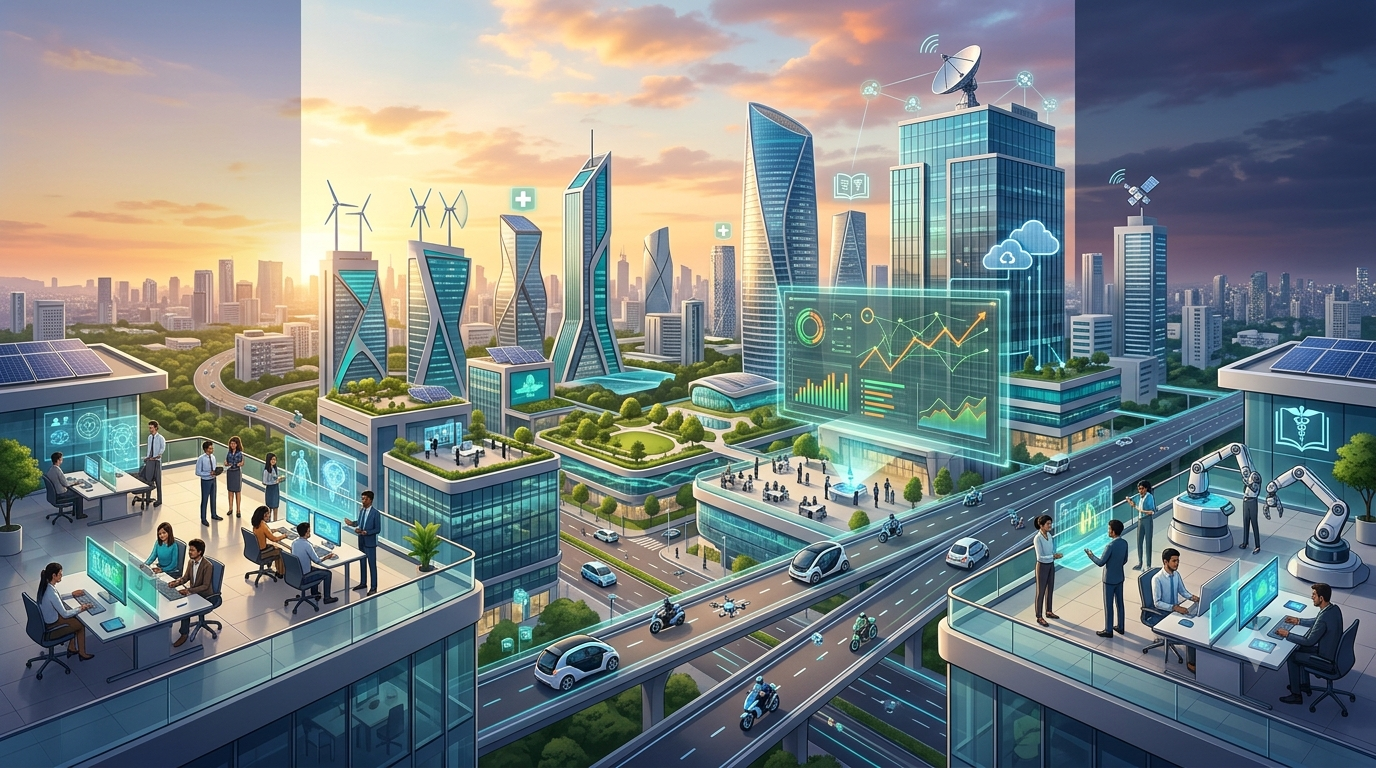
India’s startup ecosystem has transformed into one of the world’s most dynamic innovation hubs. From artificial intelligence and fintech to climate technology and space innovation, Indian entrepreneurs are building businesses that solve real-world problems while attracting significant investor interest. With supportive government policies, increasing venture capital activity, expanding digital infrastructure, and a rapidly growing consumer market, India continues to create opportunities for startups across multiple industries.
For aspiring entrepreneurs, investors, and business enthusiasts, one question stands out in 2026: Which startup sectors offer the biggest growth potential? While funding conditions have become more selective than in previous years, investors continue to back startups with scalable business models, innovative technology, strong leadership, and sustainable revenue potential. Instead of chasing every new trend, venture capital firms are increasingly focusing on sectors capable of delivering long-term value.
Whether you’re planning to launch your own company, looking for investment opportunities, or simply exploring India’s startup landscape, understanding these emerging sectors can help you stay ahead of market trends. This guide explores the industries attracting investor attention, why they matter, and how they are shaping the future of India’s economy.
India’s Startup Ecosystem Is Entering a New Growth Phase
India is no longer viewed solely as a destination for software outsourcing. It has become a global center for innovation, entrepreneurship, and technology-driven businesses. Thousands of startups are solving challenges in healthcare, education, agriculture, logistics, finance, sustainability, manufacturing, and enterprise software.
Several factors continue to fuel this momentum. Rising internet penetration, affordable smartphones, widespread digital payments, supportive government initiatives such as Startup India, expanding incubator networks, improved access to seed funding, and increasing corporate adoption of technology have created a favorable environment for founders.
Investors are also becoming more disciplined. Rather than prioritizing rapid customer acquisition at any cost, they now look for startups that demonstrate product-market fit, efficient operations, recurring revenue, and a clear path toward profitability. This shift has encouraged entrepreneurs to build stronger businesses from the beginning.
1. Artificial Intelligence (AI) Startups Continue to Dominate Investment Conversations
Artificial Intelligence has become one of India’s fastest-growing startup sectors. From generative AI tools to enterprise automation platforms, AI is transforming how businesses operate across industries.
Indian startups are developing AI-powered products for healthcare diagnostics, customer support, cybersecurity, education, finance, legal services, marketing, manufacturing, and logistics. Businesses increasingly rely on AI to automate repetitive tasks, analyze massive datasets, personalize customer experiences, and improve operational efficiency.
Investors particularly favor AI startups that solve industry-specific problems rather than offering generic solutions. Companies building Software-as-a-Service (SaaS) platforms powered by AI are attracting strong interest because they can scale globally while maintaining relatively low operational costs.
The increasing availability of cloud computing, machine learning platforms, and open-source AI models has also reduced barriers for new founders entering this space.
2. FinTech Is Still One of India’s Strongest Startup Opportunities
India’s digital payment revolution continues to reshape financial services. Unified Payments Interface (UPI), digital banking, online lending, embedded finance, insurance technology, wealth management, and financial inclusion have created enormous opportunities for startups.
Today’s fintech companies focus on simplifying financial services for individuals, small businesses, and enterprises. Many startups leverage AI to improve fraud detection, automate compliance, assess creditworthiness, and personalize financial products.
Investors appreciate fintech businesses because they often address large underserved markets while generating recurring revenue through subscriptions, transaction fees, or financial partnerships.
As financial literacy increases and digital banking expands into smaller cities, fintech remains one of India’s most attractive sectors for long-term investment.
3. HealthTech Is Modernizing Healthcare Delivery
Healthcare innovation accelerated dramatically over the past few years, creating lasting opportunities for startups.
HealthTech companies are improving patient care through telemedicine, AI-assisted diagnostics, wearable devices, digital health records, online pharmacies, remote monitoring, preventive healthcare platforms, and hospital management software.
India’s growing population, rising healthcare awareness, and increasing demand for accessible medical services make HealthTech particularly attractive for investors. Startups capable of reducing healthcare costs while improving quality of care are expected to witness significant growth.
AI-powered diagnostic platforms, personalized medicine, mental health applications, and preventive wellness solutions are becoming major investment themes.
4. ClimateTech Is Becoming an Investment Priority
Climate change has transformed sustainability from a social responsibility into a business opportunity.
ClimateTech startups focus on reducing emissions, improving resource efficiency, promoting renewable energy, managing waste, conserving water, and enabling sustainable manufacturing.
Investors increasingly recognize that environmental challenges create long-term business opportunities. Startups working on carbon accounting, clean energy solutions, EV charging infrastructure, battery recycling, sustainable agriculture, and circular economy models continue attracting capital.
Government incentives and corporate ESG commitments further strengthen this sector’s long-term outlook.
5. EV and Mobility Startups Are Accelerating Growth
India’s electric mobility revolution extends well beyond manufacturing electric cars.
Modern mobility startups operate across battery technology, charging infrastructure, fleet management, vehicle financing, predictive maintenance, autonomous systems, shared mobility, and smart transportation.
As electric vehicle adoption increases nationwide, supporting infrastructure becomes equally important. Investors are actively evaluating startups solving charging accessibility, battery swapping, energy management, and fleet optimization challenges.
The combination of environmental awareness and government incentives continues driving innovation throughout the mobility ecosystem.
6. SaaS Startups Continue Building Global Businesses from India
Software-as-a-Service remains one of India’s greatest startup success stories.
Indian SaaS startups build cloud-based software for businesses worldwide across human resources, accounting, cybersecurity, customer relationship management, marketing automation, project management, legal technology, and business analytics.
Unlike traditional businesses requiring extensive physical infrastructure, SaaS companies can reach international customers through digital distribution while maintaining high scalability.
Investors value SaaS startups because recurring subscription revenue provides predictable cash flow and long-term customer relationships.
7. Agritech Is Transforming Indian Agriculture
Agriculture remains one of India’s largest economic sectors, making Agritech an important investment category.
Modern startups help farmers improve productivity through precision agriculture, AI-powered crop monitoring, weather forecasting, drone technology, supply chain optimization, digital marketplaces, soil analysis, irrigation management, and financial services.
Technology enables farmers to make better decisions while reducing waste and increasing profitability.
As food security and sustainable farming become national priorities, Agritech startups continue attracting institutional investors and impact funds.
8. DefenceTech and Aerospace Are Emerging High-Growth Industries
India’s increasing focus on domestic manufacturing and technological self-reliance has created significant opportunities in DefenceTech.
Startups are developing drones, surveillance systems, cybersecurity platforms, AI-powered defense software, robotics, communication systems, satellite technologies, and autonomous vehicles.
Private participation in aerospace and defense innovation continues expanding, encouraging investors to explore opportunities previously dominated by government organizations.
Space technology startups developing satellite communication, Earth observation, launch services, and space data analytics are also gaining international recognition.
9. EdTech Is Evolving Beyond Online Learning
Education technology has matured considerably.
Instead of focusing solely on recorded courses, today’s EdTech startups build AI tutors, personalized learning platforms, skill development ecosystems, corporate training solutions, language learning applications, career guidance tools, and professional certification platforms.
Investors increasingly support startups addressing employability, lifelong learning, and workforce upskilling rather than relying only on traditional online education models.
As industries rapidly adopt AI and automation, continuous learning platforms are expected to experience sustained demand.
10. Cybersecurity Startups Are Becoming Essential
Digital transformation has increased cyber risks for organizations of every size.
Indian cybersecurity startups develop identity management systems, cloud security platforms, endpoint protection, fraud detection solutions, threat intelligence tools, and compliance automation software.
Growing regulatory requirements and increasing cyber threats make cybersecurity one of the most resilient technology sectors.
Businesses now view cybersecurity as a necessity rather than an optional investment, creating stable market demand for innovative startups.
11. D2C Brands Continue Redefining Consumer Commerce
Direct-to-Consumer brands have fundamentally changed retail.
Instead of relying exclusively on traditional distributors, modern startups build direct relationships with customers through digital platforms.
Popular D2C categories include beauty, skincare, fashion, nutrition, home décor, electronics, personal care, wellness, pet products, and sustainable consumer goods.
Successful brands leverage customer data, influencer marketing, personalized shopping experiences, and efficient supply chains to compete with established companies.
Investors prefer D2C startups demonstrating strong customer retention and healthy unit economics rather than simply pursuing rapid sales growth.
12. Robotics and Automation Are Entering Mainstream Business
Automation is no longer limited to large manufacturing facilities.
Indian startups now develop robotic solutions for warehouses, healthcare, agriculture, logistics, hospitality, and industrial operations.
Artificial intelligence combined with robotics enables businesses to improve efficiency, reduce operational costs, and address labor shortages.
As Industry 4.0 adoption increases, robotics startups are expected to play an increasingly important role across sectors.
What Investors Look for Before Funding a Startup
Raising investment has become more competitive than ever. While innovative ideas remain important, investors now evaluate startups using a broader set of criteria.
First, founders must demonstrate that they are solving a genuine market problem rather than building technology without customer demand. Strong product-market fit significantly improves funding prospects.
Second, investors analyze the size of the addressable market. Startups operating in rapidly expanding industries naturally receive greater attention because they offer larger growth opportunities.
Third, the founding team matters. Investors look for complementary skills, execution capability, industry expertise, adaptability, and long-term commitment.
Fourth, business models must be sustainable. Healthy unit economics, recurring revenue, customer retention, and operational efficiency often outweigh aggressive but unprofitable expansion.
Finally, startups that effectively leverage emerging technologies such as AI, automation, cloud computing, and advanced analytics while maintaining regulatory compliance tend to stand out during funding discussions.
Government Initiatives Supporting Emerging Startups
India’s startup ecosystem has benefited significantly from public initiatives designed to encourage entrepreneurship and innovation.
Startup India has simplified recognition for eligible startups while improving access to networking opportunities and support programs. DPIIT recognition has become an important milestone for many early-stage companies seeking credibility and eligibility for various government initiatives.
The Startup India Seed Fund Scheme has helped bridge early-stage funding gaps by supporting proof-of-concept development, prototype creation, product trials, market entry, and commercialization through approved incubators.
Across the country, universities, research institutions, technology parks, private accelerators, and corporate innovation centers continue providing mentorship, infrastructure, technical guidance, and investor access to promising founders.
Cloud providers and technology companies have also introduced startup programs offering cloud credits, AI tools, technical training, and mentorship, enabling founders to build sophisticated products without significant upfront infrastructure costs.
Common Mistakes That Prevent Promising Startups from Succeeding
Not every innovative idea becomes a successful company. Many startups struggle because they prioritize rapid expansion before validating customer demand.
Some founders spend heavily on branding and marketing without establishing sustainable revenue streams. Others expand into multiple markets too quickly, exhausting available capital before achieving profitability.
Ignoring customer feedback, weak financial planning, unclear business models, regulatory challenges, founder conflicts, and poor hiring decisions can also limit long-term growth.
Successful entrepreneurs continuously validate assumptions, monitor financial performance, improve products based on customer insights, and scale only after building a solid operational foundation.
Future Startup Trends Investors Will Watch Beyond 2026
India’s startup landscape will continue evolving rapidly.
Generative AI, autonomous systems, climate innovation, semiconductor technologies, quantum computing, industrial automation, precision agriculture, biotechnology, space technology, digital healthcare, and cybersecurity are expected to remain major investment themes over the coming years.
Cross-sector innovation will become increasingly common. AI will enhance healthcare, agriculture, finance, education, logistics, manufacturing, and retail simultaneously, creating entirely new business models.
Investors are also expected to favor startups demonstrating measurable social impact alongside financial sustainability, particularly in areas such as clean energy, financial inclusion, healthcare accessibility, and education.
Conclusion
India’s startup ecosystem has matured into one of the world’s most exciting innovation markets. While funding conditions are more disciplined than in previous years, opportunities have never been greater for founders building technology-driven businesses that solve meaningful problems.
Artificial Intelligence, FinTech, HealthTech, ClimateTech, SaaS, Agritech, DefenceTech, Mobility, Robotics, Cybersecurity, EdTech, and Direct-to-Consumer brands are among the emerging startup sectors attracting the strongest investor interest in 2026. Each represents not only a rapidly growing market but also an opportunity to address real economic and societal challenges.
For entrepreneurs, success will depend on identifying genuine customer needs, validating ideas early, building sustainable business models, leveraging government and ecosystem support, and adopting technologies that create long-term competitive advantages. Investors, meanwhile, will continue seeking startups with visionary founders, scalable solutions, sound financial discipline, and the ability to thrive in an increasingly digital economy.
As India’s innovation ecosystem expands, the next generation of successful startups is likely to emerge from founders who combine technological expertise with deep market understanding, creating businesses that deliver lasting value for customers, investors, and society alike.

NCR DELHI TEAM